The Quiet Between the Carols: Planning a British Hindu December in 2026
December in Britain is rarely quiet. The high street glitters, schools rehearse nativities, workplaces book tables, and family calendars fill with visits and meals. For British Hindu households, the month can also bring a full mandir programme, personal devotional commitments and the ordinary rhythm of work and school. The temptation is to treat these demands as competing loyalties. A more useful approach is to treat them as a planning question: how can a family keep December 2026 steady, generous and spiritually grounded without exhausting itself?
At Shree Shakti Mandir, we see families managing this well and families managing it anxiously. The difference is seldom devotion. It is preparation. The suggestions below are practical rather than prescriptive. They are offered for households who want to honour invitations, keep commitments and protect the quiet that makes the season meaningful.
Begin with the Mandir Calendar, Not the Invitations
The first mistake many households make is to fill the diary with social invitations and then try to fit devotion around the gaps. A better method is to begin with the dates that matter spiritually and communally. Before the school newsletter arrives, sit down with the mandir calendar for December 2026. Mark the evenings set aside for aarti, any seva rota commitments, festival preparations and personal practices such as daily japa or a short reading.
This is not about rigidity. It is about having a centre. Once the fixed points are visible, invitations can be considered honestly. A family might decide that Tuesday evenings remain protected, while Saturday afternoons are open for social visits. The aim is not to refuse the world but to enter it with a clear sense of what will be kept.
The School Nativity: An Invitation, Not a Test
The school nativity can feel like a small minefield. A child may be given a role, a class may sing carols, or a parent may be asked to help with costumes. None of this need be a crisis of identity. Attending a school performance as an audience member is a act of care for a child and for the school community. It does not require adopting another faith's theology. It requires courtesy, attention and a willingness to be present.
If a child has a role, talk together about what the family is comfortable with. Some families are happy for a child to take part in a school play as a cultural and educational experience. Others prefer to ask the school for a different role or to explain their position respectfully. Both approaches can be honourable. What matters is that the child is not left to navigate the decision alone or to feel that family devotion and school life are in opposition.
Practical steps help. Confirm dates early. Ask the school for the running order and expected finish time. If a performance falls on a mandir evening, speak to the school in advance rather than simply absenting yourself. Teachers are accustomed to balancing many family commitments and usually appreciate clear, early communication.
Office Parties and the Art of the Brief Appearance
Workplace celebrations can be more tiring than they appear. The pressure is often social rather than contractual. A Hindu employee may feel obliged to attend every event, stay late, or join in habits that do not suit them. A gentler boundary is possible: attend the part that matters, greet colleagues, show appreciation, and leave when the event moves into territory that does not fit your choices.
There is no need to announce a theological position at the office party. A simple, friendly exit works: "I have an early start tomorrow" or "I am glad I could come for a while." If alcohol is central to the event, choose a soft drink and do not make it a speech. If a Secret Santa or festive meal is organised, participate where it feels comfortable and decline where it does not. The aim is good relations without overcommitment.
Family Expectations and the Anchor Day
Extended family can be the most tender part of December. Parents, in-laws and relatives may have expectations about visits, meals and gifts. For mixed households, the complexity increases. Rather than negotiating every invitation separately, set one or two anchor days. These are the days when the family will gather, exchange hospitality and give proper attention to relatives.
Once an anchor day is set, communicate it early and gently. "We are keeping the 27th for family this year" is clearer than a series of vague maybes. It also frees the household from the anxiety of trying to be everywhere. If travel is involved, consider the impact on children and older relatives. A shorter visit with full attention is often better than a longer one with frayed nerves.
Protect a Quiet Morning
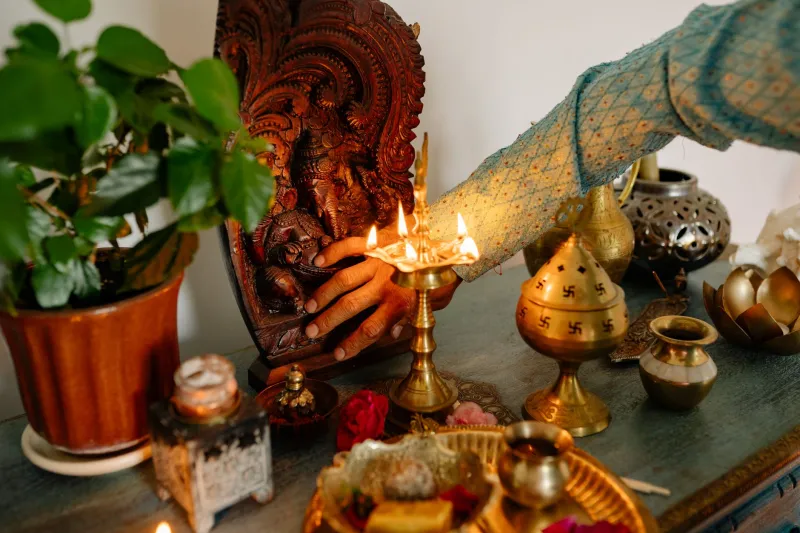
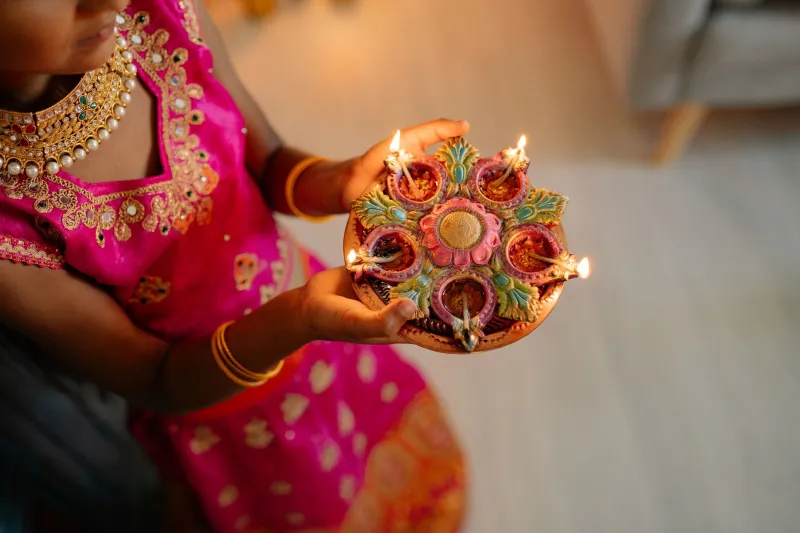
December can become a month of evenings. School concerts, office parties, family meals and mandir gatherings all tend to happen after dark. This can leave little room for the reflective side of devotion. Try to protect one quiet morning each week. It need not be elaborate. A lamp, a short aarti, a few minutes of silence or a reading from a favourite text can hold the day together.
At the Mandir, we often hear that people feel closer to their practice when they have a small, repeatable routine rather than an ambitious one. Fifteen minutes of steady attention is worth more than an hour of distracted intention. December 2026 will be busy. A quiet morning is not an escape from the season; it is what makes the season bearable and sincere.
Speak of Invitations, Not Loyalties
Language shapes feeling. If a family talks about the school nativity as a threat to Hindu identity, children may learn anxiety. If they talk about it as an invitation that can be accepted with clear boundaries, children learn confidence. The same applies to office parties, family meals and community events. British Hindu life is not a zero-sum contest between December traditions. It is a lived negotiation, made easier by honesty and good planning.
A Short Checklist for December 2026
- Put mandir dates and personal practice into the diary first.
- Confirm school nativity dates and communicate any clashes early.
- Decide on one or two family anchor days and share them clearly.
- At work events, arrive with good will and leave with good grace.
- Protect a weekly quiet morning for devotion.
- Keep explanations short, respectful and free of apology.
Shree Shakti Mandir wishes every household a December that is warm without being frantic, sociable without being scattered, and quiet enough for devotion to be heard.