Fast Days in a Mixed Household: A Practical Guide to Vrat in a British Kitchen
Vrat days have a way of arriving inconveniently. The eleventh day of the lunar fortnight does not consult the family calendar. It falls in exam week, on a day of back-to-back meetings, on the afternoon of a birthday party with a table full of food.
And yet the observance persists — quietly, flexibly, and often privately — in thousands of British Hindu households. Some keep a full fast. Many more keep a partial one. Almost everyone, in our experience, is improvising a little.
What follows is intended as practical guidance, not prescription. Family tradition varies widely between regions and communities, and it should always come first. Where health is concerned, so should your GP.
What a Vrat Day Actually Involves
Ekadashi — the eleventh day of each lunar fortnight — is the best-known recurring vrat, but it is far from the only one. Navratri, Shivratri, Purnima, Sankranti and particular days of the week all carry observances in different households.
The common thread is restraint undertaken as discipline rather than punishment: a simplified diet, a quieter day, more time given to prayer or reading. Traditionally the day is broken with a meal after the fast, or with fruit and milk, or with a single simple meal — and the detail of that varies enormously from one family to another.
Many households keep what is best described as a partial vrat: no grains and no pulses, but a normal day in every other respect. Others take only water. Both are recognised; neither is more virtuous than the other by default.
The School Run Problem
A fast day does not pause the domestic timetable. Children still need breakfast, and a parent who is not eating still has to make it.
One practical approach is to cook the family’s usual meal and prepare your own separately, in a larger batch for the whole day. Another is to choose a partial observance on working days and keep the fuller fast for a weekend or a quieter date in the lunar month — a widely practised adjustment, and not a lesser one.
It also helps to plan the evening in advance. The most common way a vrat day collapses is not temptation but exhaustion: coming home at seven to an empty fridge and no plan.
A Phalahar Larder from the Supermarket
Fasting food in Britain no longer requires a trip across town. Most of the following is available in a standard supermarket, with the remainder from any Asian grocer.
- Potatoes and sweet potatoes. The backbone of most phalahar meals — boiled, roasted, or made into a simple sabzi with rock salt.
- Rock salt (sendha namal / sendha namak). Widely stocked; ordinary table salt is usually avoided on vrat days in many traditions.
- Buckwheat (kuttu) and amaranth (rajgira) flour. For rotis and puris. Also sold as ready-made mixes.
- Sago (sabudana) and makhana. Sabudana khichdi with peanuts and potato is a genuinely quick weekday option; roasted makhana makes an easy snack.
- Dairy and fruit. Milk, yoghurt, bananas, apples, berries. A bowl of yoghurt with fruit is a complete and unfussy fast-day breakfast.
- Nuts and seeds. Peanuts, cashews, almonds — good for keeping energy steady through a long afternoon.
A realistic fast-day plate, then: roasted sweet potato with rock salt; a kuttu roti; a bowl of yoghurt; fruit through the day. Nothing exotic, nothing expensive.
Children, Questions and Colleagues
Children notice. A parent who is not eating at the table will be asked why, and the answer is worth preparing in advance.
Keep it simple and unthreatening: we are remembering God today, so we are eating lightly. Avoid framing the day as denial, and avoid making it a test the child must pass. Many families invite children to join for part of the day — a fruit-only breakfast, a small prayer — and let them decide as they grow.
Colleagues require a different script. A single sentence is usually enough: “It’s a fast day for me — I’ll eat later.” There is no obligation to explain further, and no obligation to accept the biscuit.
Older Relatives, Medication and Knowing Your Limits
This is the part of the guidance that matters most, and it is not ours to give in detail.
Anyone who takes regular medication — for diabetes, blood pressure, epilepsy, thyroid conditions, or anything else — should speak to their GP or pharmacist before altering their eating pattern. Some medicines must be taken with food. Some conditions make dehydration genuinely dangerous. A pharmacist can tell you plainly and quickly, and there is no shame in asking.
Older relatives may also keep a fast out of long habit while their body is no longer suited to it. Raising this gently, and with respect for their autonomy, is better done well before the day itself than at the table.
Pregnant and breastfeeding women, and anyone recovering from illness, are commonly exempted in tradition itself. That exemption is not a loophole; it is part of the practice.
The Point Is Not the Menu
The temptation, in a culture of meal plans and optimisation, is to turn vrat into a dietary system with rules to be scored. It is not that.
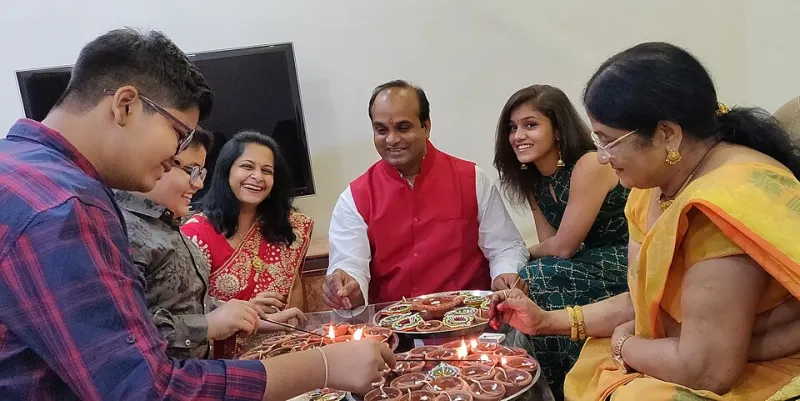
It is a day set slightly apart — a day when the ordinary business of eating is simplified so that something else can be attended to. In a British household with two working parents and a full fridge, the observance may look modest indeed: a lighter plate, a lamp at dusk, a few extra minutes given to a prayer.
That is enough. Follow your family’s tradition, take advice where advice is needed, and be kind to yourself in the keeping of it.