Under the Full Kartik Moon: A Family's Guide to Purnima 2026 in Britain
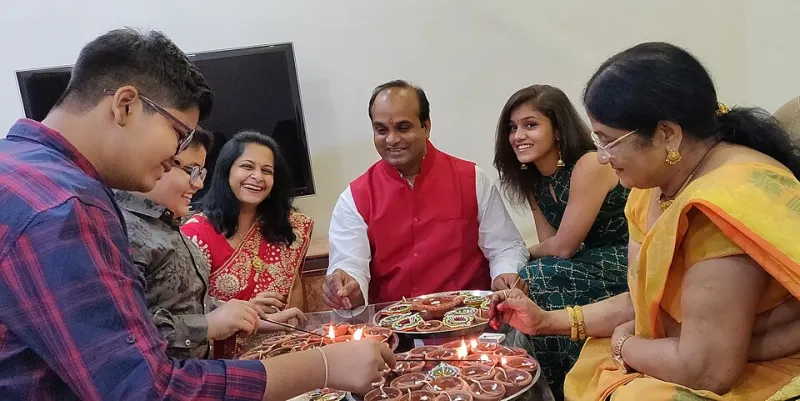
Photo: Arnav, CC BY-SA 4.0, via Wikimedia Commons
Kartik is the month that quietly closes the Hindu festival year. After the fireworks and the sweets, after the crowds have gone home, the lunar calendar offers one last bright marker: the full moon of Kartik, which this year falls on Tuesday 24 November 2026. In Britain that means a moon rising shortly after a four o'clock sunset, lamps lit in kitchens from Ilford to Leicester, and a temple that will be busier than the weather might suggest.
At Shree Shakti Mandir we are often asked whether Kartik Purnima is a "big" festival. It is not Diwali, and it does not ask for new clothes or a house full of guests. What it asks for is quieter and, in some ways, harder: attention. Below is a guide to the day, its stories, and the practicalities of keeping it in a British November.
Why the Full Moon of Kartik Matters
Purnima — the full-moon day — carries weight across the Hindu year, but the Kartik Purnima is traditionally held to be among the most auspicious. Scriptural traditions associate the month of Kartik with devotion, restraint and the giving of light, and the full moon with completion. Many families treat the day as a moment to take stock before the winter settles in.
Different communities in Britain will tell you different stories about why the day is kept. Some remember the descent of the goddess Annapurna, who governs nourishment, and mark the occasion by feeding others. Some recall the appearance of Lord Kartikeya. Some speak of the Matsya avatar and the preservation of what is precious through the flood. The details vary by region and by family; what remains constant is the lamp, the water, and the gathering.
What Actually Happens on the Day
Observance is not uniform, but three elements recur across most households and temples.
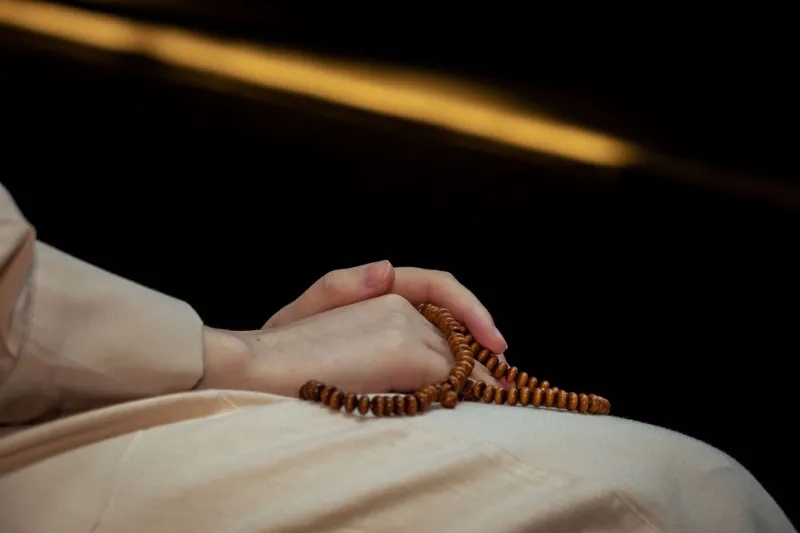
The early bath. Traditionally, devotees bathe before sunrise, ideally in a sacred river. In Britain, on a late-November morning, the practical translation is a bath or shower before dawn, undertaken with a little more intention than usual. Many families keep a small vessel of water on the altar and offer it while reciting a simple prayer. Cold water at six in the morning in Manchester is its own kind of offering.
The lamps. Lamps are lit at dusk — at home, on doorsteps, at the temple, and in some communities on the water itself. Whereas Diwali lighting is expansive and public, Kartik Purnima lighting tends to be smaller and more contemplative: a single diya placed somewhere it can be seen.
The gathering. Temples hold special programmes, usually in the evening, with bhajans, a short discourse and prasad. Because the festival is not a public holiday in the UK, most families attend after work or school rather than through the day.
The Story Behind Dev Diwali
In parts of India — most famously in Varanasi — the Kartik full moon is celebrated as Dev Diwali, the "festival of the gods". The story is that on this night the deities, having observed the month of Kartik, descend to bathe in the sacred rivers, and the earth is lit to welcome them. The result is one of the most photographed sights in the Hindu world: kilometres of ghats lined with lamps.
In Britain the geography changes but the instinct does not. Several of our community members describe lighting lamps along a garden wall, a windowsill or a balcony rail, and simply standing with them for a few minutes. It is a modest adaptation of a grand tradition, and it works.
Dev Diwali also carries the memory of Shiva's victory over the three demon cities, and in many homes the day is remembered as Tripurari Purnima. This year it coincides, as it often does, with the birth anniversary of Guru Nanak Dev Ji, a coincidence that many British families of mixed or neighbouring traditions mark together. Light, on this night, is not a scarce commodity.
At Shree Shakti Mandir This Year
Our programme on 24 November will follow the shape of previous years: an evening aarti, a reading from the Kartik traditions, a short talk on the meaning of the full moon in devotional life, and prasad shared afterwards. Families with young children are warmly encouraged to come early and to bring a lamp to light; our volunteers will have a supply of diyas and tea lights on hand for anyone who arrives without one.
Because the evening falls on a weekday, we expect a steady flow of visitors rather than a single crowd. Doors will open well before the aarti begins, and there will be space at the back for pushchairs and for anyone who needs to sit. Parking near the mandir is limited on weekday evenings, so if you are travelling by car, please plan to arrive with time to spare.
Practical Tips for Households
- Light one lamp, deliberately. There is no requirement to fill the house. A single diya, lit at dusk and watched for a moment, is enough.
- Keep it safe. Battery tea lights are welcome at the mandir and are a sensible choice in homes with small children or pets. If you light an oil lamp, place it on a non-flammable surface away from curtains and never leave it unattended.
- Check the tithi, not just the date. Purnima may begin the previous evening. If you follow a specific family tradition, check the timings your household observes.
- Offer something. Annapurna's association with nourishment makes the day a natural one for donating to a food bank or cooking for a neighbour.
- Wrap up warm. A British November evening is not a Banaras ghat. If you plan to step outside to see the moon, do it properly dressed and, ideally, with a hot drink waiting indoors.
Sharing the Light Beyond the Mandir
One of the quieter pleasures of Kartik Purnima in Britain is how often it is explained to someone who has never heard of it. A lamp on a windowsill invites questions. Those questions are, in their own way, part of the festival: an opportunity to speak about the month of Kartik, about the full moon, and about why a household in Leicester or Harrow sets aside a November evening for a small flame.
We look forward to seeing many of you on 24 November. Bring a lamp. Bring a child. Bring a neighbour who has never been inside a mandir. The light of the full moon will do the rest.