The Many Faces of Shakti: British Hindus on Strength, Service and Everyday Life
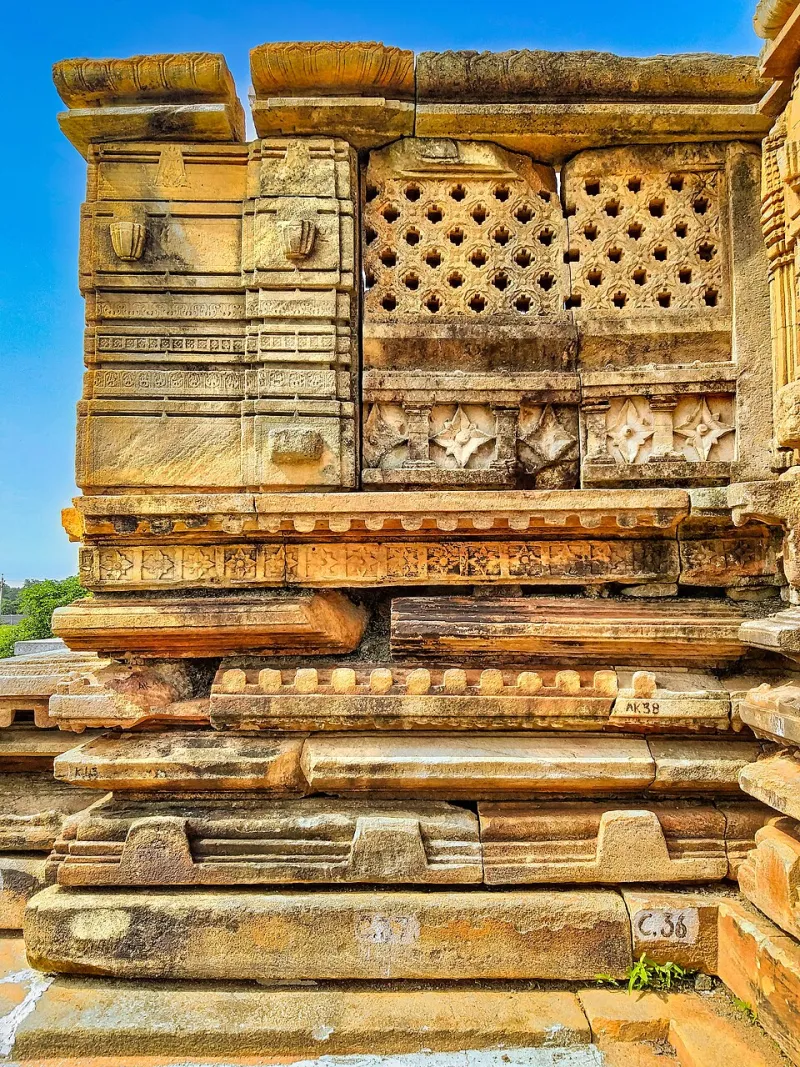
Photo: P. Madhusudan, CC0, via Wikimedia Commons
A word that resists a simple answer
Ask ten British Hindus what Shakti means and you may receive ten different answers. For some, the word points to the divine feminine as expressed in Durga, Kali, Lakshmi or Saraswati. For others, it describes an everyday capacity: the energy to care for a family, to challenge an unfair decision at work, to organise a community meal or to remain steady through grief. In 2026, as the temple community grows and changes, these definitions sit alongside one another rather than competing.
Shree Shakti Mandir recently invited volunteers, younger professionals and elders from across the UK to reflect on the idea of divine feminine energy and its place in ordinary decisions. The conversations took place over several weeks, in the community hall, after Sunday worship and by telephone with members who now live far from the temple. What emerged was not a single doctrine but a set of practical observations about courage, duty and companionship.
Strength is often quiet
Meera, 54, has coordinated the mandir's food bank collection for six years. She lives in Leicester and works part-time in administration. For her, Shakti is not expressed in grand gestures. 'It is the strength to keep going when nobody is watching,' she said. 'There are mornings when the boxes need sorting before work, and nobody will thank you. That is also Shakti.'
She recalled a period when her mother was ill and the temple's volunteers organised meals without being asked. 'I learned that power can be gentle. People think of Shakti as something fierce, and it can be. But it is also the friend who turns up with dinner and says nothing.'
Her view was echoed by several older members. Kamla, 72, who attends the mandir from Harrow, said that the language of divine feminine energy had helped her understand her own mother's resilience. 'We used to think of these goddesses as far away,' she explained. 'Now I see that the courage to hold a household together is a form of the same energy.'
Ambition, duty and the workplace
Younger members often spoke about Shakti in relation to work and ambition. Arjun, 31, a software engineer in Manchester, described the concept as a corrective to the idea that professional success requires relentless self-assertion. 'Shakti is not only about pushing forward,' he said. 'It is also about knowing what you are responsible for and what you are not. That has helped me make decisions about jobs and about how much I am willing to give to a company.'
Priya, 29, a project manager in Birmingham, said the image of Durga had shaped her response to a difficult workplace dispute. 'I was the most junior person in the room, and I had to say that a decision was wrong,' she recalled. 'I kept thinking about the idea of Shakti as the energy that protects what matters. It gave me a way to be firm without being unkind.'
For some, the connection to Shakti is less direct. Ravi, 38, a teacher in London, said he understands the concept through the women in his family. 'My grandmother ran a shop, raised four children and organised everything at the temple,' he said. 'I did not hear the word Shakti much growing up, but I saw it in action. Now I try to explain that to my own children.'
Parenting with courage and compassion
Parents who spoke to the mandir described Shakti as a resource for the daily negotiations of family life. Several mentioned the tension between wanting children to be confident and wanting them to be considerate. 'The goddesses are not passive,' said one mother of two teenagers in Reading. 'They fight. But they also nurture. I want my children to know that strength and kindness are not opposites.'
Another volunteer, who asked not to be named, spoke about caring for a child with additional needs. 'There are days when I have no energy left,' she said. 'I do not think of Shakti as magic. I think of it as the next small step. That is enough.'
Elders in the community often framed the same idea through stories from scripture. One retired priest associated Shakti with the moment before creation, when energy is potential rather than action. 'We should not reduce it to a slogan,' he said. 'It is a mystery, and we approach it with humility.'
The mandir as a shared household
At Shree Shakti Mandir, the idea of Shakti is embedded in the practical work of running a community space. Volunteers clean the shrine, cook for festivals, teach children, visit the housebound and manage the temple's modest finances. The work is not always visible, and it is not always glamorous. Yet it is the means by which worship is sustained from week to week.
Young professionals who joined the temple's recent volunteering day spoke about the satisfaction of doing something tangible. 'I spend all day on a laptop,' said one participant. 'Here, I can see the result. The hall is clean. The food is ready. People are sitting together.' That experience, several said, reframed Shakti as something shared rather than individual.
A photo essay in three rooms
The community feature is accompanied by a photo essay curated by temple volunteers. The images were taken in three rooms: the main shrine, where lamps are lit each morning; the kitchen, where volunteers prepare meals for the community lunch; and the entrance hall, where a rangoli is drawn by children during festival workshops. The photographs focus on hands, work surfaces and the small details that make up devotional life.
One image shows an older volunteer grinding spices for a temple meal. Another shows a group of teenagers arranging chairs before a bhajan session. A third shows a child carefully placing a finished diya on a tray. Together, the photographs suggest that Shakti is not confined to the shrine. It is present in the labour that makes worship possible.
An invitation to add your voice
The mandir's conversations are ongoing. Readers who wish to contribute their own definition of Shakti can write to [email protected] or speak to a volunteer after Sunday worship. Contributions may be considered for a future community bulletin or for a follow-up feature later in 2026. The temple welcomes reflections from members of all ages, including those who are new to the community and those who have worshipped elsewhere.
There is no requirement to produce a polished answer. A sentence, a memory or a photograph may be enough. The aim is to record the many ways in which British Hindus understand divine feminine energy in their own lives, and to leave room for the definitions that are still being formed.